
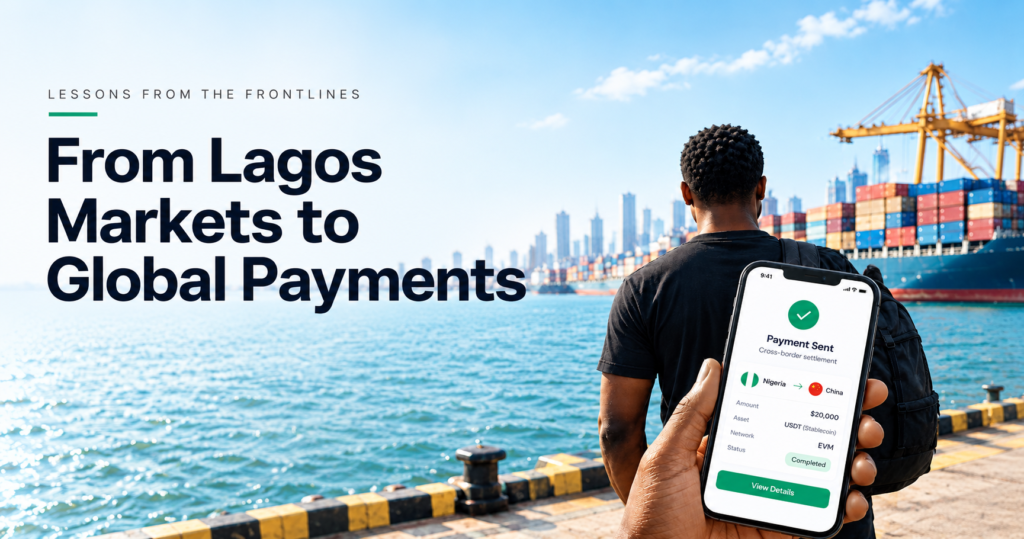
In 2019, I had a 2% conversion rate trying to get Lagos market vendors to accept crypto payments. People called me a scammer more than once. Six years later, stablecoins move over $200 billion a year through Sub-Saharan Africa, and I think the real opportunity nobody’s built yet is sitting inside one specific $20 billion corridor. Here’s the story, and where I think it’s headed.
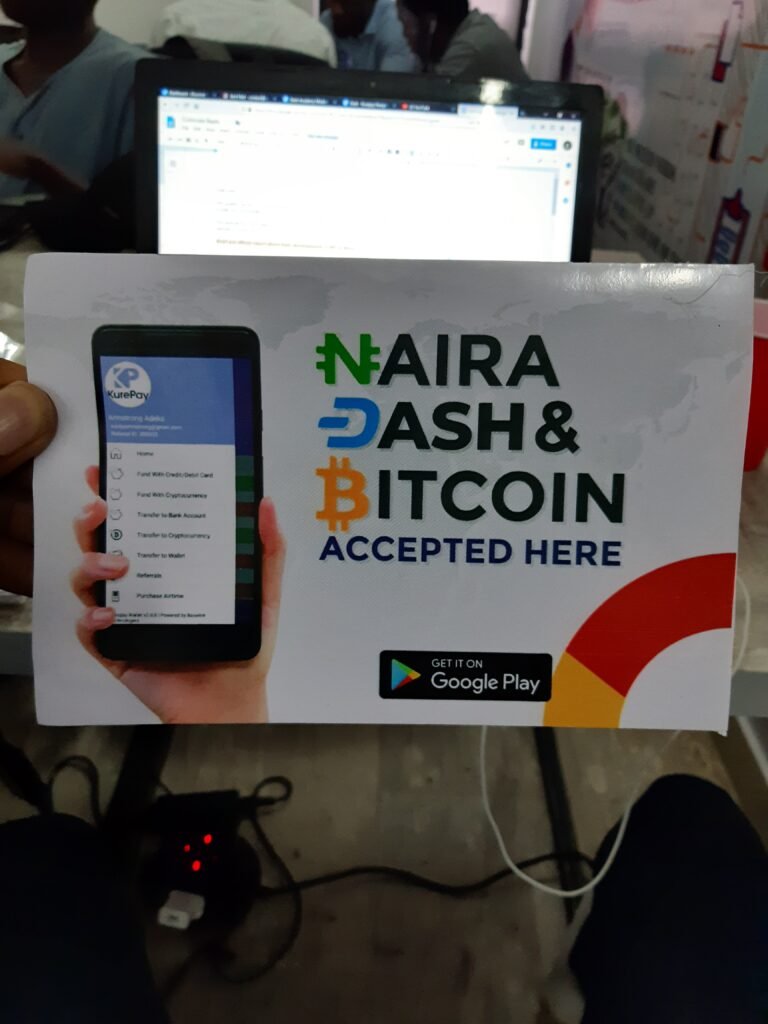
In 2019, I led merchant and product adoption for Dash in Nigeria, working under Nathaniel Luz. We were trying to build a crypto payment ecosystem years before stablecoins were mainstream, back when the conversation was still mostly about Bitcoin.
My first approach was wrong. I assumed the problem was simply merchant adoption, so I spent weeks walking through Lagos markets like Ikeja Computer Village, pitching shop owners on accepting Dash. My conversion rate was about 2%. A few people called me a scammer. Fair enough, honestly, why would a merchant who already accepts cash, transfers, and POS switch to a currency they’d never used?
So I changed strategy. Instead of chasing physical merchants one by one, I moved to online vendors already operating digitally. I called over 500 businesses and signed more than 100. Something clicked. Existing Dash holders actually started spending there. That’s when I understood the real problem wasn’t merchant adoption in isolation, it was building both sides of a network, supply and demand, at the same time.
That lesson still shapes how I think about stablecoins today. The question I ask now isn’t “can crypto technically do this payment,” it’s “does crypto solve a problem existing rails can’t.” For everyday domestic payments in Nigeria, bank transfers already work in seconds. There’s no compelling reason to switch.
The real opportunity shows up somewhere else: cross border settlement and internet native commerce. A Nigerian business importing from China doesn’t just need to pay a merchant, it needs to move value between two entirely different financial systems. That’s a much harder problem, and it’s exactly where stablecoins earn their place.
The data backs this up. Chainalysis reports Sub-Saharan Africa received over $205B in on-chain value between July 2024 and June 2025, up roughly 52% year over year, with Nigeria alone accounting for more than $92B. Stablecoins now make up around 43% of the region’s transaction volume, increasingly used for cross border trade and remittance, not retail spending.
The China corridor is where I think this plays out most clearly. Nigeria imports over $20B a year in goods from China, and right now, most of that gets settled through an informal network, businesses relying on individuals who hold both Naira and Alipay accounts, converting value manually and charging steep fees for the privilege. It works, but it’s slow, opaque, and expensive precisely because no compliant, purpose built rail exists for it yet.
That’s also exactly where the opportunity sits. A settlement process that today can take days, and depends on trusting an informal middleman with your money, could realistically shrink to under an hour on compliant stablecoin rails, at a fraction of the cost, with an actual audit trail. The businesses moving real volume in this corridor don’t need convincing that crypto is interesting. They need three specific things: compliant settlement into Alipay and WeChat, real KYC infrastructure that doesn’t cost a fortune to run, and enough liquidity depth to handle large transactions without the process breaking down. Whoever builds that well, not just cheaply, but compliantly, has a real shot at owning one of the least served high value corridors in emerging market payments.
I’ve spent the last few months deep in exactly these conversations, mapping the settlement flow, the compliance requirements, and the partners this corridor actually needs. If you’re building stablecoin infrastructure for China settlement, or payment rails for African businesses more broadly, I’d love to trade notes. I’m actively looking for the right team to build this with.